Craig Barton interviews guests from the wonderful world of education about their approaches to teaching, educational research and more. All show notes, resources and videos here: https://www.mrbartonmaths.com/blog/
Sign up for your free trial at HoD Space at hodspace.com.
Access the show notes here: https://podcast.mrbartonmaths.com/230-hod-space-ep2-notes-in-exercise-books-offsted-and-a-level-class-sizes/
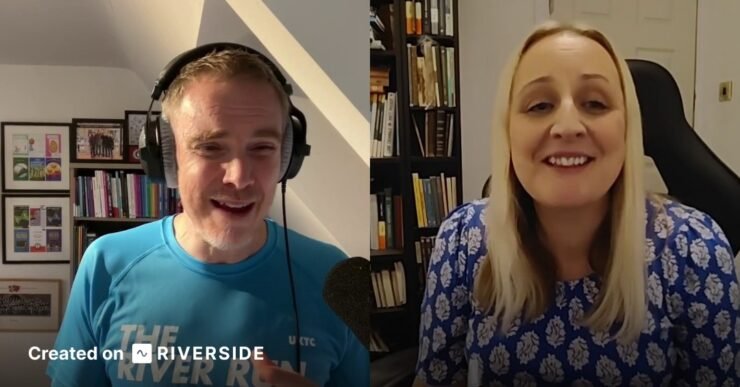
In this episode of the podcast, Jo Morgan and Craig Barton discuss:
1. What actually goes in the exercise book
Prompted by a HoD Space member’s survey request, Craig puts four options to the community — I do, we do and independent work; I do and independent work; independent work only; or no exercise books at all — and reports where members landed. He sets out why he thinks copying down worked examples is a pace killer and an illusion of understanding, Jo explains why she models on the board but never asks students to copy it, and the two of them disagree about whether key words and definitions have earned their place in the book.
2. What the new Ofsted framework means for heads of maths
Jo asked HoD Space members for recent first-hand experience of inspection under the new framework, and reports back on what came out of it: deep dives have gone, middle leaders may not be asked to talk about their own department, and questions about the maths curriculum are landing with line managers instead. She and Craig work through what that means in practice — the workload around annotated seating plans, the pressure schools are putting on exercise books, the focus on gaps in Year 7 prior knowledge — and land on the same advice from two directions: make sure the person who line-manages you can articulate what happens in maths lessons and why.
3. A-level class sizes
A thread from a member who had seen their A-level groups grow turned into the episode’s biggest surprise. Jo describes teaching 28 in further maths and hearing from a school with 32 in a room that seats 32, before setting out why this bites from three angles — the head of maths trying to recruit and carrying an ever-larger key stage five, the classroom teacher who physically cannot get round the room, and the student who was told A-level classes would be smaller than GCSE ones. Craig brings in the Campaign for Mathematical Sciences research on the scale of the problem, and Dylan Wiliam’s warning that cutting class sizes only improves outcomes if teachers do something different with the time — and if the extra teachers you hire are as good as the ones you have.


HoD Space

If you’re a Head of Maths or an aspiring Head of Maths, please join our HOD Space community, where you can find CPD and resources as well as a whole community of people doing the exact same job as you. Start your free, no-obligation, no-card trial at hodspace.com.
Episode Overview
In this episode of the podcast, Jo Morgan and Craig Barton discuss:
1. What actually goes in the exercise book
Prompted by a HoD Space member’s survey request, Craig puts four options to the community — I do, we do and independent work; I do and independent work; independent work only; or no exercise books at all — and reports where members landed. He sets out why he thinks copying down worked examples is a pace killer and an illusion of understanding, Jo explains why she models on the board but never asks students to copy it, and the two of them disagree about whether key words and definitions have earned their place in the book.
2. What the new Ofsted framework means for heads of maths
Jo asked HoD Space members for recent first-hand experience of inspection under the new framework, and reports back on what came out of it: deep dives have gone, middle leaders may not be asked to talk about their own department, and questions about the maths curriculum are landing with line managers instead. She and Craig work through what that means in practice — the workload around annotated seating plans, the pressure schools are putting on exercise books, the focus on gaps in Year 7 prior knowledge — and land on the same advice from two directions: make sure the person who line-manages you can articulate what happens in maths lessons and why.
3. A-level class sizes
A thread from a member who had seen their A-level groups grow turned into the episode’s biggest surprise. Jo describes teaching 28 in further maths and hearing from a school with 32 in a room that seats 32, before setting out why this bites from three angles — the head of maths trying to recruit and carrying an ever-larger key stage five, the classroom teacher who physically cannot get round the room, and the student who was told A-level classes would be smaller than GCSE ones. Craig brings in the Campaign for Mathematical Sciences research on the scale of the problem, and Dylan Wiliam’s warning that cutting class sizes only improves outcomes if teachers do something different with the time — and if the extra teachers you hire are as good as the ones you have.
Resources discussed in the show
- HoD Space — the community for heads of maths, with forums, surveys, Jo’s CPD video library and a bank of downloadable resources (hodspace.com)
- Resourceaholic — Jo Morgan’s blog (resourceaholic.com)
- The myth of copying things down — Craig’s Eedi newsletter post arguing that copying lesson objectives, worked examples and corrections may be a waste of lesson time
- Adam Boxer’s Tick Trick — the technique Craig suggests as an alternative to copying, where students complete a second We Do in their books and the teacher allocates ticks line by line
- #037 Jane Jones: Ofsted, observations, marking & reasoning — Craig’s interview with Ofsted’s then HMI National Lead for Mathematics
- #180 Surviving and thriving an Ofsted inspection with Ofsted’s Maths Subject Lead Steve Wren — the more recent of Craig’s two Ofsted conversations, including the exchange on exercise books referred to here
- #050 Dylan Wiliam – the return! Creating the Schools our Children need — the episode in which Dylan explains why reducing class sizes is not as effective as you might think
- Campaign for Mathematical Sciences (CaMS) — the research Craig quotes, commissioned from Teacher Tapp, found that more than half of state-funded schools teaching A-level maths have a class of 20 or more, and a quarter have classes of 25 or more
- DfE maths teacher targets don’t add up when demand is growing — Bobby Seagull’s Schools Week piece on recruitment targets and A-level class sizes, referenced by Jo
Video
Stuff we have been working on:
- My Tips for Teachers Guides to… series
- My updated mrbartonmnaths website
- Jo’s resourceaholic website
My usual plugs
- You can help support the podcast (and get an interactive transcript of this episode) via my Patreon page at patreon.com/mrbartonmaths
- If you are interested in sponsoring an episode of the show, then please visit this page
- You can sign up for my free Tips for Teachers newsletter and my free Eedi newsletter
- My online courses are here: craigbarton.podia.com
- My books are “Tips for Teachers“, “Reflect, Expect, Check, Explain”, “How I wish I’d taught maths”, and my Tips for Teachers Guide to… series.