Craig Barton interviews guests from the wonderful world of education about their approaches to teaching, educational research and more. All show notes, resources and videos here: https://www.mrbartonmaths.com/blog/
In an unscheduled episode, Kris Boulton analyses a trainee teacher's volume-of-prisms sequence. He and Craig Barton work through key design principles — simplifying the rule, stripping out the arithmetic, starting with the general case, and building testing and expansion sequences that force genuine mathematical thinking. Access the show notes here: podcast.mrbartonmaths.com/227-breaking-down-an-example-sequence-with-kris-boulton


Episode sponsors
The National Institute of Teaching’s NPQs are open for applications! NPQs are a great way to develop your skills and knowledge, build a powerful peer network and have an even bigger impact in school. There are 10 to choose from, all designed to fit in with busy workloads. There is now only one cohort per year, so apply now or wait until 2027/28. Scholarship funding is available, but it’s limited, so we recommend getting your application in before the summer break. To find out more, go to niot.org.uk/npqs
Episode details
In an unscheduled episode, Kris Boulton analyses a trainee teacher’s volume-of-prisms sequence. He and Craig Barton work through key design principles — simplifying the rule, stripping out the arithmetic, starting with the general case, and building testing and expansion sequences that force genuine mathematical thinking.
Talking points
- How the episode came about: Manu Kapur was booked to talk about productive failure but didn’t appear, so Kris stepped in at short notice, and Craig framed the scramble as a bit of productive struggle in action.
- The two Unstoppable Learning communities on Substack: a public one open to paid subscribers, and a smaller one for schools and trusts, where conversations are as much about scaling change across a department as about the maths itself.
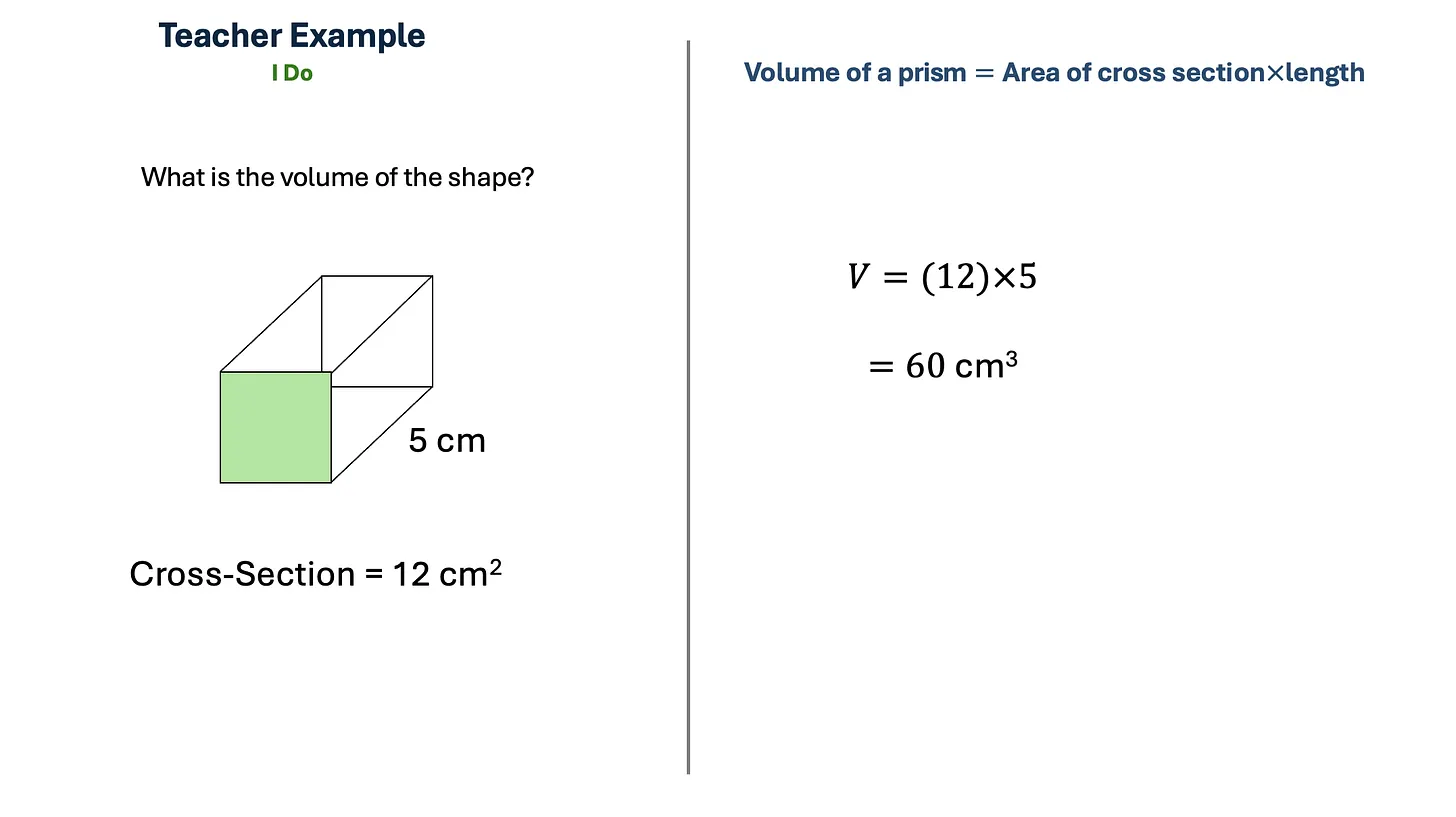
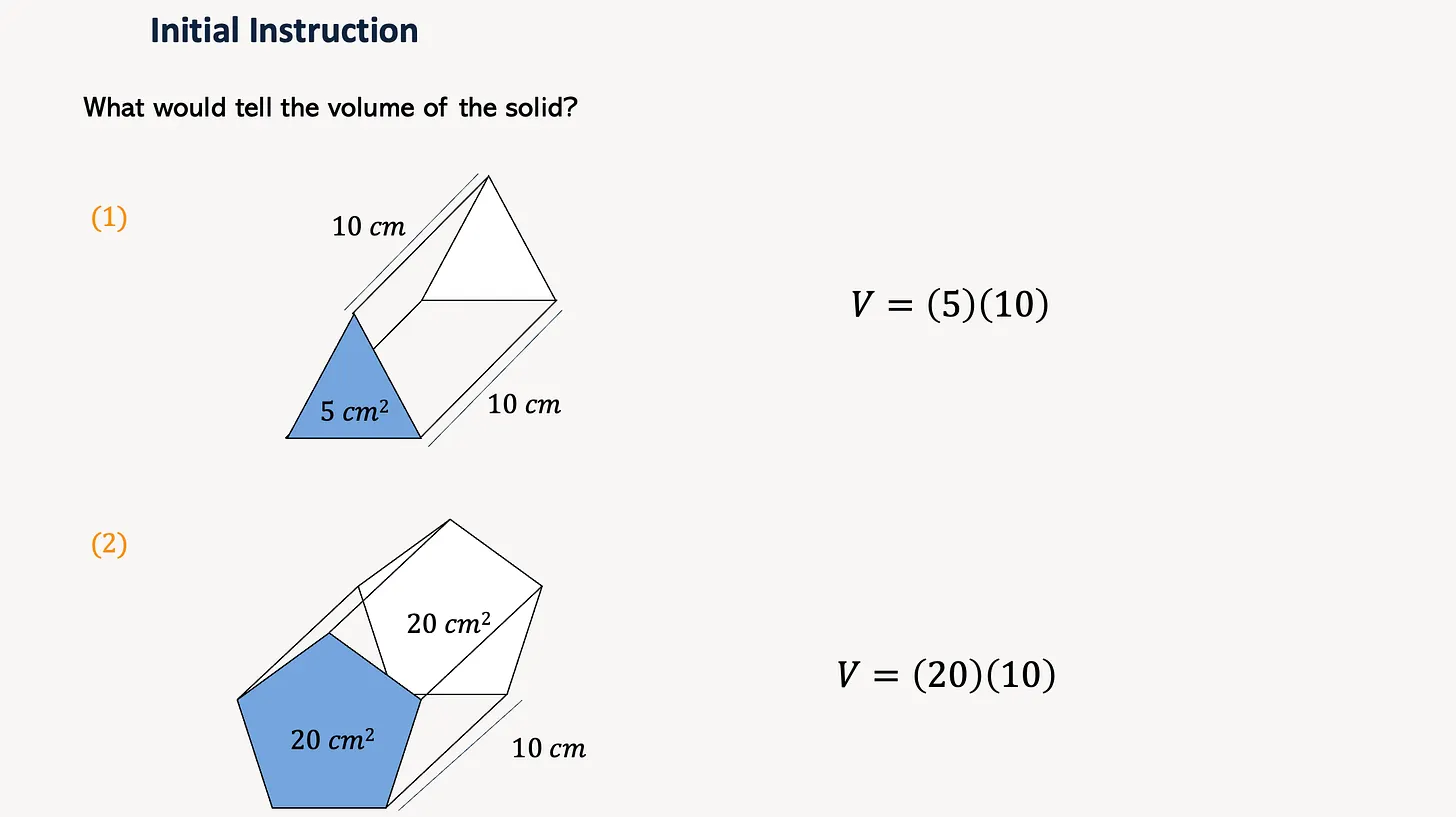
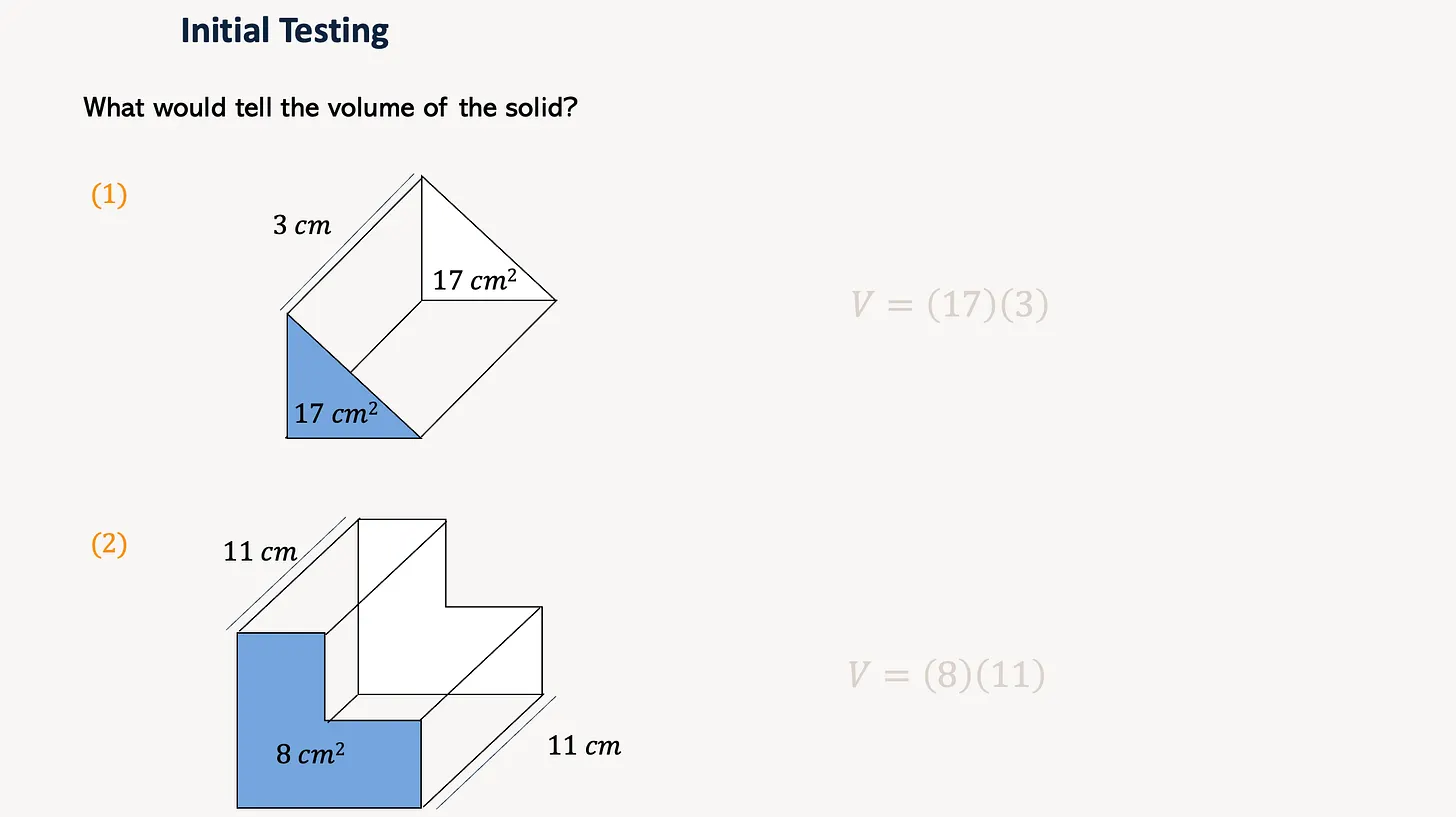
- The task under analysis, an early career teacher’s volume-of-prisms sequence, built with a history and humanities background on Teach First: two worked examples followed by three testing items.
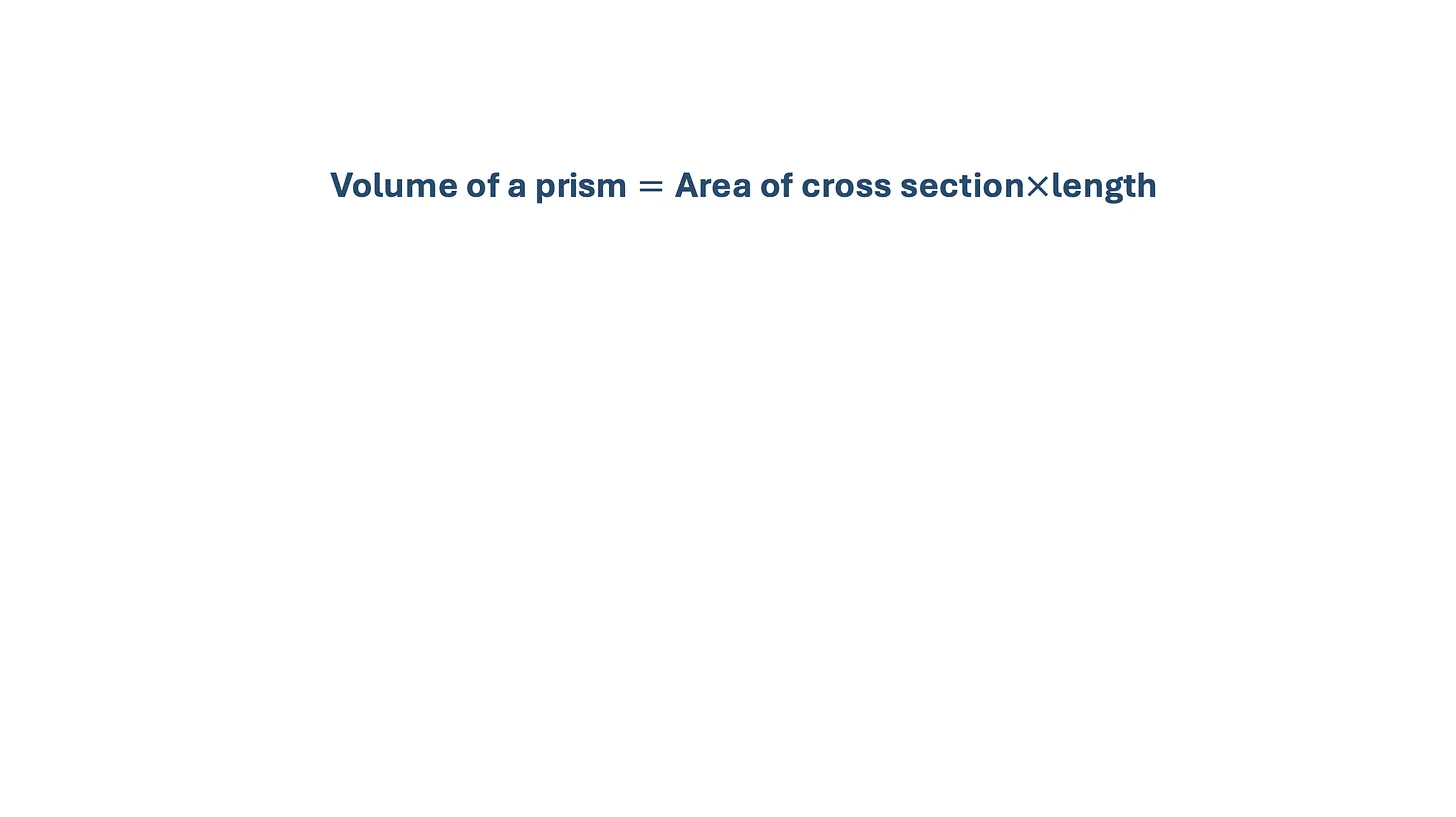
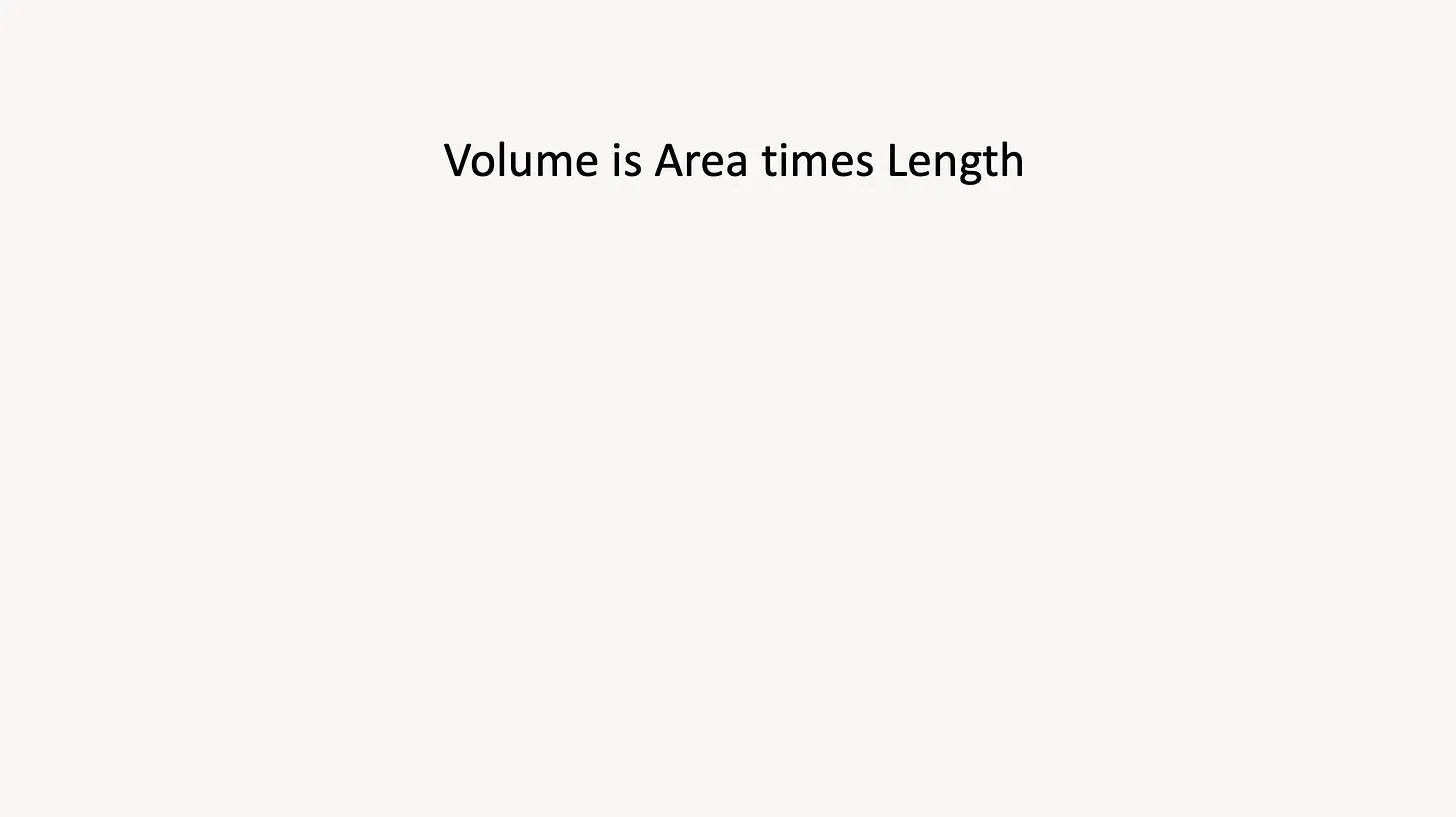
- Simplifying the rule from “volume of a prism equals area of cross section times length” to “volume is area times length”, and taking it off the slides so pupils commit it to memory through choral response rather than reading it back each time.
- Stripping out the arithmetic, writing V equals bracket twelve bracket five without evaluating it, so attention stays on constructing the expression rather than on times tables, plus Kris’s three-step approach to when arithmetic should come back in.
- Using brackets in place of the multiplication cross, and why the binary-operator symbols that help early on become clunky once pupils reach secondary mathematics.
- Starting with the general case, a triangular prism, and holding the cuboid back to the end as the special case, the one solid whose volume can be found three different ways.
- Designing tasks that force real mathematical work by adding redundant information, so pupils have to discriminate area from length rather than simply multiplying the two numbers on the diagram.
- Two worked examples versus four: the efficiency argument from Engelmann’s Theory of Instruction, and why you field-test a sequence with real pupils rather than trying to perfect it from an armchair.
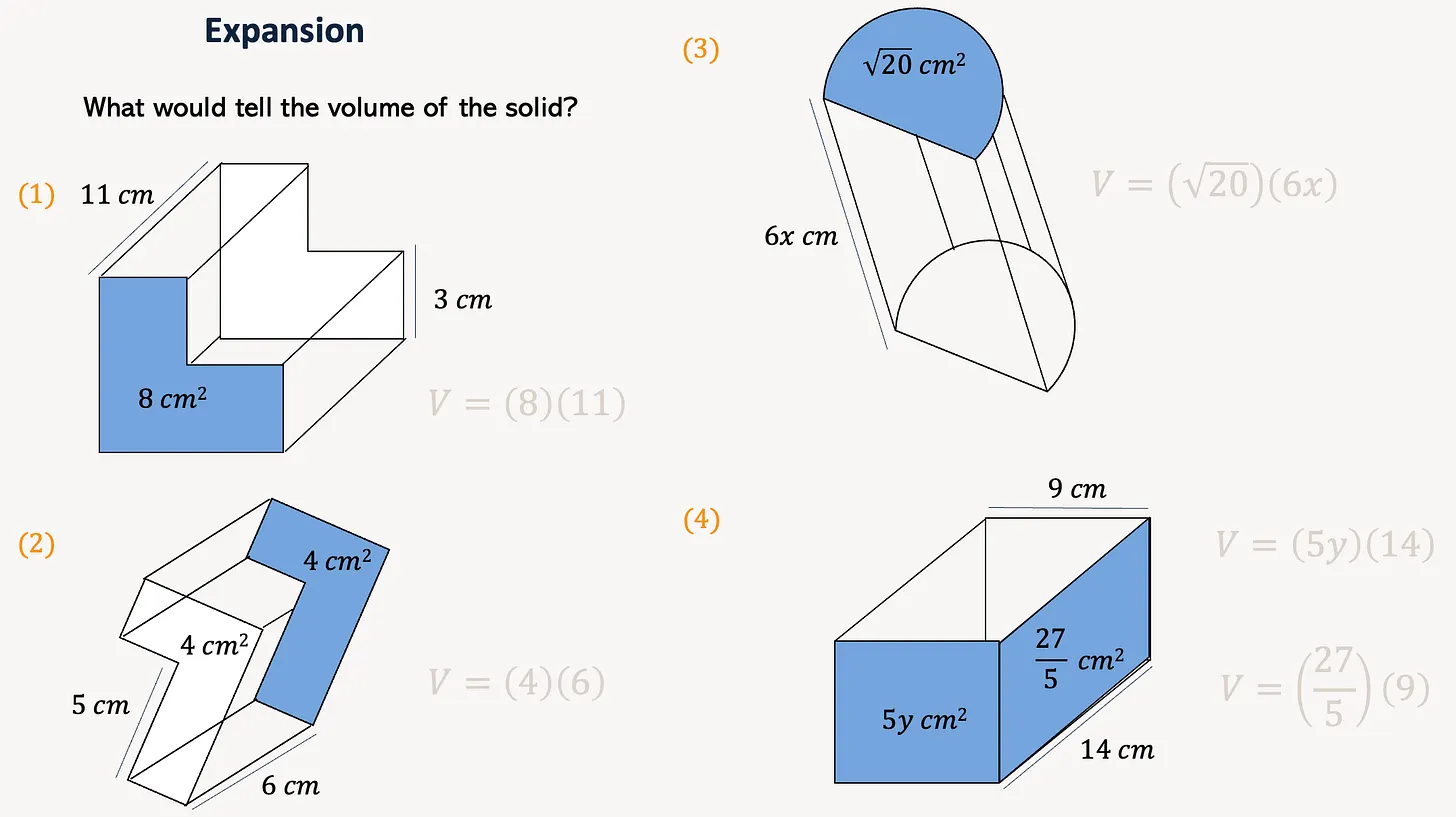
- The expansion sequence: pushing transfer with deliberately “scary” numbers such as fractions, surds and algebra, managing expansion risk, and the four ways out when a leap proves too big — tell and give another, model and return, bridge it, or park it.
Images from the episode:
The original sequence:
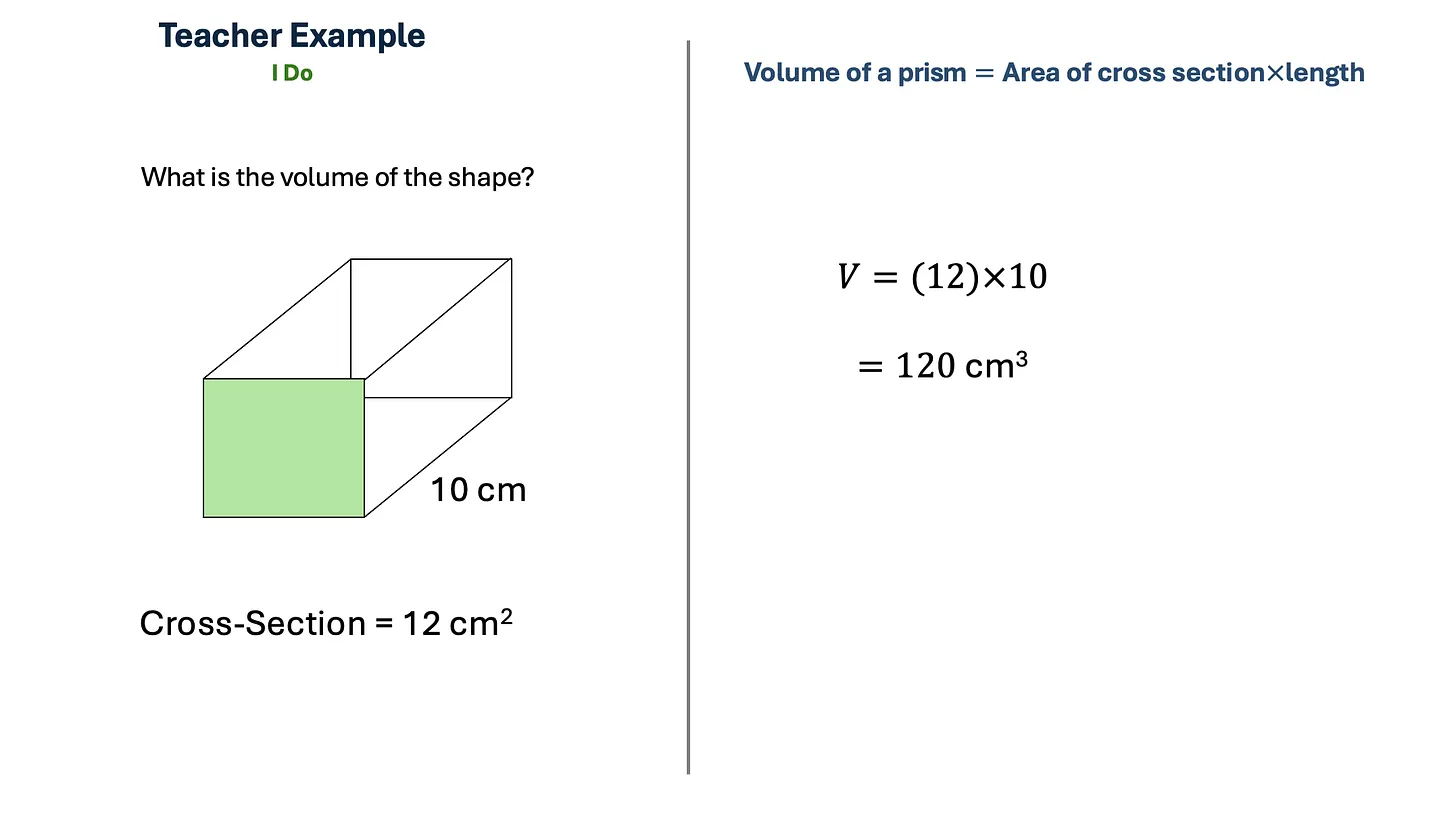
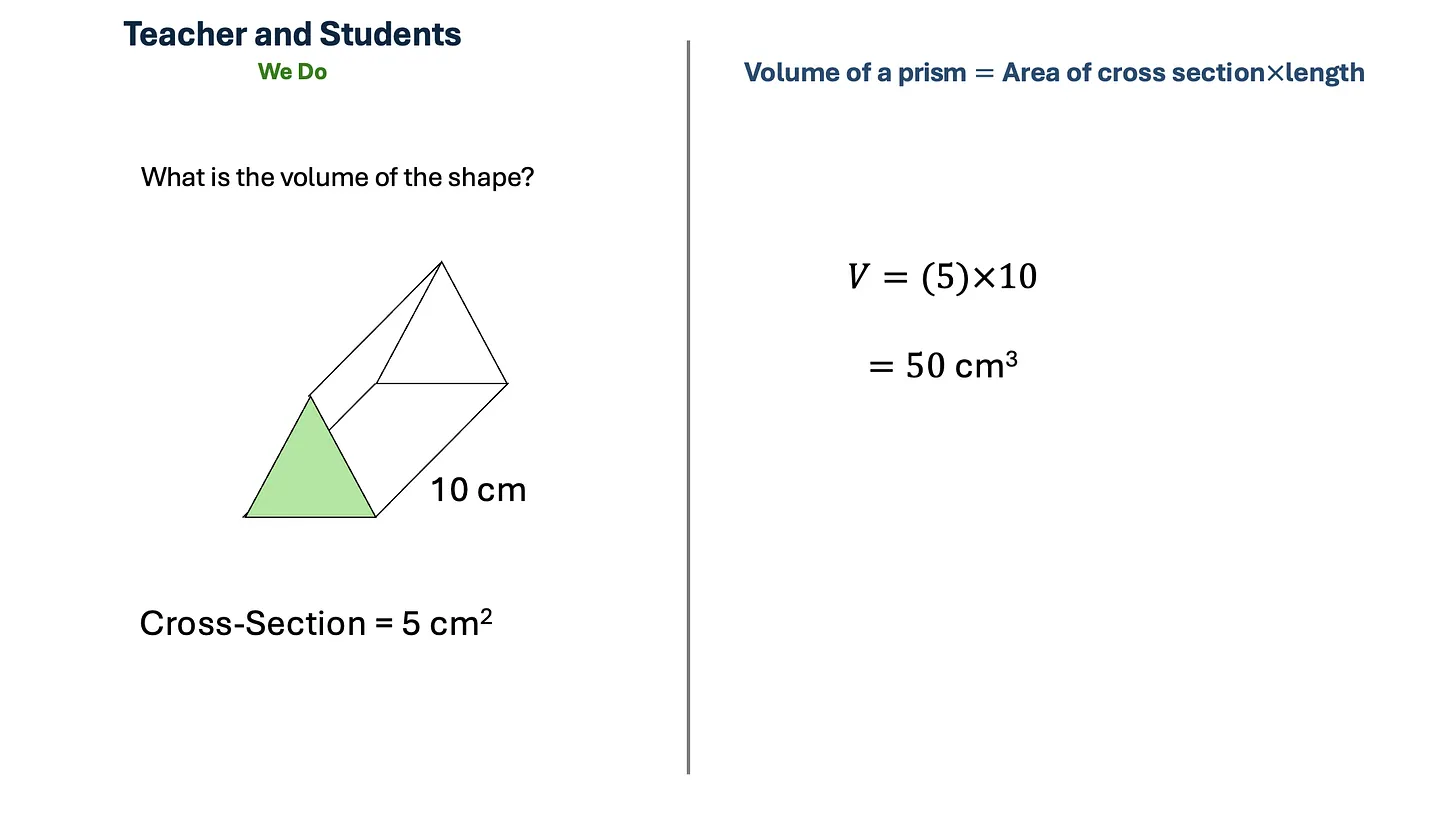
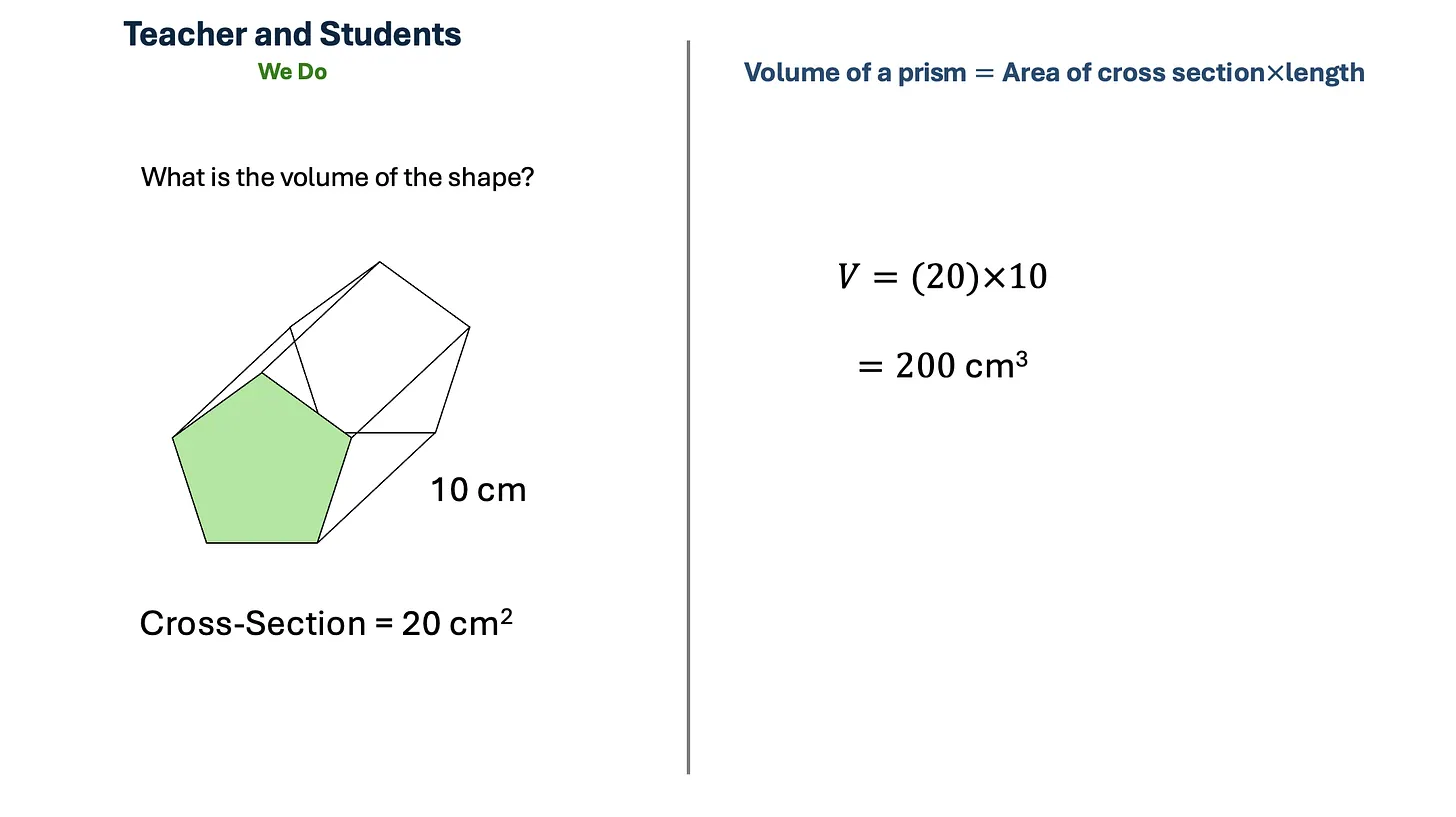
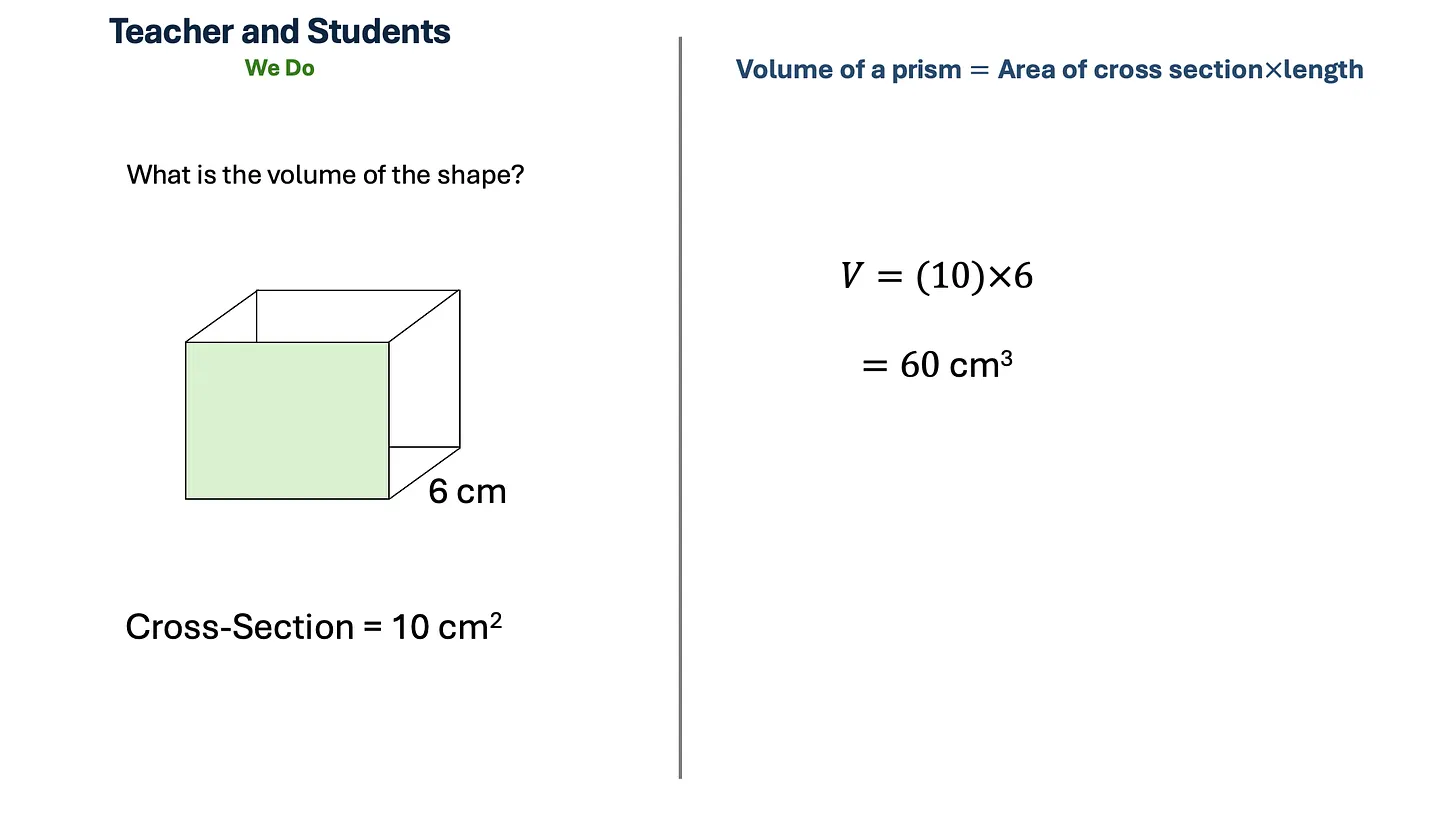
The updated sequence:
Video:
Links from Kris:
- Kris’ Substack – Unstoppable Learning
- Unstoppable Learning website (unstoppablelearning.co.uk)
- The original newsletter in which Kris discusses this sequence
Stuff I have been working on:
- My Tips for Teachers Guides to… series
- My updated mrbartonmnaths website
My usual plugs
- You can help support the podcast (and get an interactive transcript of this episode) via my Patreon page at patreon.com/mrbartonmaths
- If you are interested in sponsoring an episode of the show, then please visit this page
- You can sign up for my free Tips for Teachers newsletter and my free Eedi newsletter
- My online courses are here: craigbarton.podia.com
- My books are “Tips for Teachers“, “Reflect, Expect, Check, Explain”, “How I wish I’d taught maths”, and my Tips for Teachers Guide to… series.